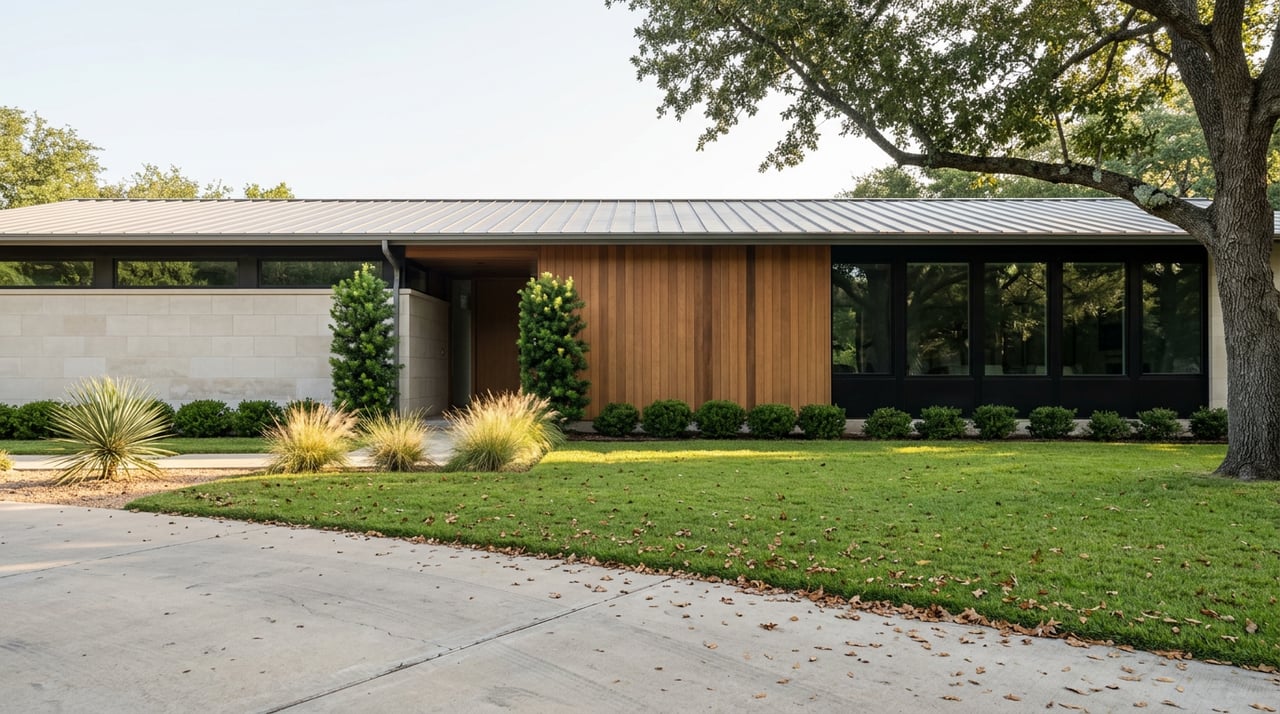
Search for the median home price in 77024 and you will get at least three different answers depending on where you look. One site puts it near $915,000. Another puts the average closer to $1.86 million. Neither is wrong. They are measuring different things, because "Memorial Villages" is not one market wearing one zip code. It is six separate cities, each with its own city hall, its own tax rate, its own permit office, and in some cases its own water utility, all filed under the same postal boundary.
That distinction matters more than most home shoppers realize, because the price gap is only the surface symptom. The real friction shows up after closing, when a buyer or seller discovers that the rules governing their lot depend entirely on which of six municipal governments happens to sit on their side of the street.
Three Maps, One Zip Code
The confusion starts with geography. Three different boundaries get called "Memorial" or "77024," and they do not describe the same set of homes.
| Data source | What it measures | Recent figure |
|---|---|---|
| HAR.com zip-code average, July 2026 | All of 77024, including areas outside the six incorporated cities | Average price near $1.86 million, roughly $358-$360 per square foot |
| Redfin's "Memorial" neighborhood boundary, three months ending May 2026 | A broader polygon that pulls in lower-priced unincorporated pockets | Median price of $915,000, up 16.6% year over year |
| The six incorporated Memorial Villages | Bunker Hill, Hedwig, Hilshire, Hunters Creek, Piney Point, and Spring Valley Village specifically | Village-level medians range from roughly $1.2 million to $2 million and above, depending on the village |
Redfin's tracked boundary also showed homes selling after 22 days on the market in that window, up from 15 days a year earlier, with 194 homes sold in May 2026 compared to 207 the prior year. That slower pace and lower price point reflects the wider polygon, not the incorporated villages themselves. A buyer comparing that $915,000 figure to a $2 million listing inside Hunters Creek Village is not comparing two prices in the same market. They are comparing two different definitions of "Memorial" that happen to share a mailing address.
Six City Halls, Six Rulebooks
The Memorial Villages are not a subdivision with a homeowners association. They are six legally distinct municipalities: Bunker Hill Village, Hedwig Village, Hilshire Village, Hunters Creek Village, Piney Point Village, and Spring Valley Village. Each runs its own council, its own permit office, and its own set of ordinances. A homeowner on one side of a street can answer to a completely different city than a neighbor directly across from them.
That fragmentation extends to public safety. The Memorial Villages Police Department covers only three of the six cities: Bunker Hill, Piney Point, and Hunters Creek. The separate Village Fire Department covers all six. Hedwig, Hilshire, and Spring Valley arrange their police coverage on their own terms outside that shared department. Nobody buying a home here is told this upfront, but it shapes which office you call, which council meeting you attend, and which permit desk reviews your renovation plans.
The Tax Bill Changes at the City Line
Because each village is its own taxing authority, the city portion of a property tax bill is not uniform across 77024. Bunker Hill Village set its 2025 tax rate at $0.271 per $100 of valuation to fund its fiscal year 2026 budget, a rate the city's own notice confirmed would raise more maintenance and operations revenue than the prior year. Hedwig Village's city rate runs higher, closer to $0.3363 per $100. Every village layers its city rate on top of a shared Spring Branch Independent School District rate near $1.0764 per $100, plus Harris County and flood control district levies.
The net effect: total property tax bills inside the six villages typically run between 1.7% and 2.1% of assessed value, generally lower than the 2.0% to 2.4% range seen just outside the village boundaries in unincorporated Harris County. That gap is small on paper but adds up on a $2 million assessment, and it is one more reason the village line matters more than the zip code line when you are running numbers on a specific address.
The Paperwork Difference: Trees, Drainage, and Lot Coverage
Renovation and rebuild projects run into the same fragmentation. Each village enforces its own tree preservation and lot coverage rules, and the thresholds are not close to identical. Piney Point Village requires a permit to remove any live tree three inches or larger in diameter, measured at four feet five inches above grade. Hilshire Village sets its threshold at eight inches and requires a replacement tree when one comes down. Hunters Creek Village goes further, requiring a plastic vapor barrier between protected tree roots and any new impervious surface, plus an ongoing root remediation schedule for construction near mature trees. Bunker Hill Village maintains its own Drainage Criteria Manual and asks for a lot coverage survey before major work begins.
None of this is disclosed on a listing sheet. A buyer evaluating a wooded half-acre lot in Hunters Creek for a future rebuild is working under a materially different permitting process than a buyer looking at a similar lot two miles away in Hilshire. Anyone budgeting a renovation or new build here should confirm which city's permit office reviews the project before finalizing a timeline, not after.
Where the Water Comes From
Water service is fragmented too. The Memorial Villages Water Authority, founded in 1962, draws from wells in the Evangeline Aquifer and supplements that supply with surface water purchased from the City of Houston. It serves roughly 9,882 residents across only three of the six villages: Hedwig, Hunters Creek, and Piney Point. Bunker Hill, Hilshire, and Spring Valley arrange water service separately. It is a small operational detail until a resident needs to resolve a billing question or understand a water quality report, at which point knowing whether the Memorial Villages Water Authority or a different provider serves a given address becomes the first practical question, not an afterthought.
Why the Listings Skew Toward Teardowns
The original housing stock across most of the six villages dates to the 1950s and 1960s, mostly one-story ranch homes on generous lots. That vintage, combined with lot sizes that run well above the Houston average, is why teardown and rebuild activity stays heavy here. The value increasingly sits in the land rather than the structure.
That dynamic sorts the market into three fairly distinct price tiers as of 2026.
| Segment | Typical price range | What it signals |
|---|---|---|
| Original ranch stock, priced for the lot | $1.1 million to $1.6 million | The teardown candidates; buyers are pricing the land and planning to rebuild |
| Renovated or updated homes | $1.5 million to $2.5 million | Move-in ready inventory for buyers who want to be settled without a construction timeline |
| New custom construction | $2 million to $4 million, occasionally higher on premium lots | Sets the upper end of the market, concentrated most heavily in Hunters Creek, Piney Point, and Bunker Hill |
Lot size drives how far that rebuild money goes. Piney Point lots range from roughly 21,000 square feet at the entry level to more than 160,000 square feet on the largest estates, while Hunters Creek averages closer to a half acre. A buyer comparing a $1.3 million ranch to a $3 million new build on a similar street is often comparing the cost of buying finished square footage against the cost of buying land and building it themselves, a decision that hinges on construction budget and timeline as much as taste.
What This Means Depending on Why You're Here
For a buyer relocating into 77024, the first useful question is not "what's the median price" but "which of the six cities does this specific address sit in, and what does that city's tax rate and permit process actually look like." For a seller sitting on original ranch stock, the fork in the road is whether the home sells better as a renovated listing or as a lot with a teardown priced in, and that answer depends on the village's tree and lot coverage rules as much as on comparable sales. For an investor evaluating a rebuild, the permit office, water provider, and tree ordinance for the specific city determine the real timeline before a shovel goes in the ground, not the zip code average.
That is the kind of groundwork Jaime Fallon walks clients through before a listing goes live or an offer gets written, pairing brokerage strategy with the design and construction oversight through Modern Houston LLC to plan a renovation or rebuild around the actual rules that apply to a given address, not a zip-code-wide assumption.
FAQ
Do all six Memorial Villages use the same building permit process? No. Each of the six cities, Bunker Hill, Hedwig, Hilshire, Hunters Creek, Piney Point, and Spring Valley Village, runs its own permit office and its own ordinances covering tree removal, drainage, and lot coverage. Confirm which city's office reviews a project before assuming a timeline.
Why do so many 77024 listings get marketed around teardown potential? Much of the original housing stock dates to the 1950s and 1960s, and on the larger lots common throughout the villages, land value has outpaced the value of the existing structure. That is why original ranch homes are frequently priced closer to $1.1 million to $1.6 million, positioned as lot purchases rather than finished homes.
Does living in a Memorial Village mean paying Houston city property tax? No. Each village is its own incorporated city and levies its own municipal tax rate instead of a City of Houston rate. Bunker Hill's rate, for example, sits at $0.271 per $100 of valuation for its current fiscal year budget, layered on top of the shared Spring Branch ISD and Harris County rates.
If you are weighing a purchase, a sale, or a rebuild anywhere in 77024, the village line will tell you more than the zip code ever will. Jaime Fallon can walk you through which of the six cities your address falls under, what that means for your tax bill and permit timeline, and whether your home is better positioned as a renovation or a rebuild. Request a complimentary consultation and home valuation to start with the specifics that actually apply to your address.