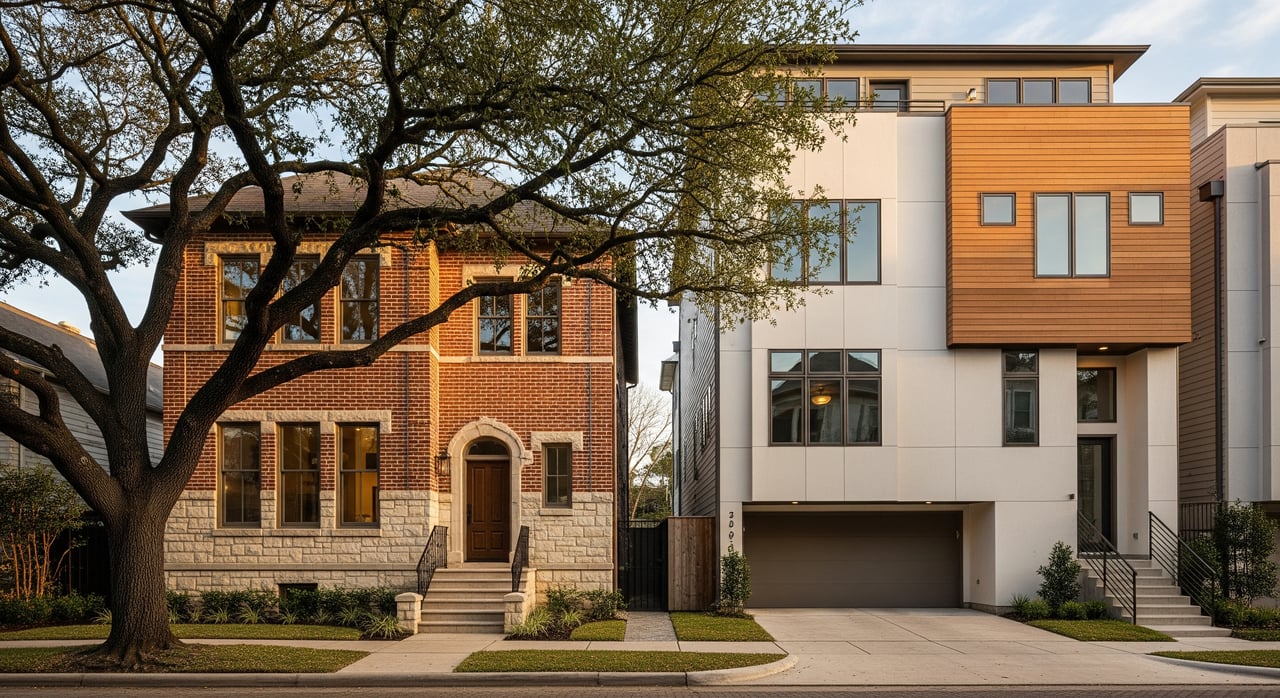
Two Montrose townhomes can look identical from the street, yet one may give you the land and exterior while the other gives you only the walls-in interior. That difference changes your maintenance, insurance, financing, and resale. If you want an urban, lock-and-leave lifestyle, choosing the right structure matters. This guide breaks down fee simple vs condo townhomes in Montrose so you can buy confidently and avoid surprises. Let’s dive in.
Fee simple townhomes explained
What you actually own
With fee simple, you own the lot and the structure as one real property estate. You control the building exterior and the land, unless recorded covenants limit certain changes. In Montrose, many attached townhomes are fee simple even if they share walls or sit on zero-lot-line parcels.
Who handles maintenance
You are typically responsible for exterior upkeep, roof, foundation, driveways, and landscaping. Some fee-simple communities still have HOAs that handle limited exterior items or shared services. Always review recorded covenants to see what is and is not covered.
Insurance and taxes
You generally carry a full homeowners policy that covers the dwelling and your liability. Flood is separate and not included in standard policies. Property taxes are assessed by the county on the value of your lot and improvements, and you can apply the Texas homestead exemption if it is your primary residence.
Condo townhomes explained
What you actually own
With a condo, you own the unit interior as defined by the condominium declaration. The land, exterior walls, roof, and common elements are owned jointly through the association. In Houston, many townhome-style buildings are legally condos even if they look like traditional townhomes.
Association and dues
You will pay monthly assessments that fund exterior maintenance, common areas, master insurance, and reserves. Small associations are common in Montrose and may be volunteer-run. Lower dues can mean fewer reserves and a higher risk of special assessments when big projects come due.
Insurance and utilities
You typically carry an HO-6 policy that covers interior improvements, personal property, and liability. The association’s master policy covers the building exterior and common areas, but the scope varies. Check if utilities are separately metered or master-metered, since that affects your monthly costs.
Montrose quirks that matter
Same look, different deeds
Two neighboring townhomes can have the same design but very different legal structures. One may be fee simple and the other a condo. Do not assume from the architecture or the marketing description. Confirm the ownership form through the title report and recorded documents.
HOA culture varies
Montrose has everything from professional management to very informal boards. Small, volunteer-run associations may keep dues low but can lack reserves and long-term planning. Professional management often signals stronger budgeting, clearer rules, and better documentation.
Flood and elevation
Parts of Montrose sit near bayous and local drainage paths. Even outside FEMA high-risk zones, localized flooding can happen. Ask for flood zone determinations, any elevation certificates, and the association’s flood insurance details if you are considering a condo.
Financing and resale
Loan approvals
Lenders usually view fee-simple townhomes like single-family homes, which simplifies underwriting. Condos can face project-level reviews for reserves, litigation, insurance, owner-occupancy, and delinquency levels. FHA and VA options may be limited for some condo projects, although some single-unit approvals are possible.
Down payment and rates
Conventional loans are available for both forms, but lenders may set stricter terms for condos depending on the project’s risk profile. You may see higher down payments or more conditions for condos, especially in small or new associations without strong reserves. Talk to a lender early so your pre-approval reflects the specific property type.
Resale drivers
Buyers in Montrose care about walkability, condition, parking, HOA health, and flood history. A well-run condo with solid reserves and predictable dues can resell well. Fee-simple townhomes with deferred exterior maintenance or unusual lot issues can face pushback from buyers.
Lifestyle trade-offs
Control vs convenience
If you want control over the exterior and land, fee simple fits that goal. If you want a true lock-and-leave lifestyle with exterior maintenance handled, a condo may be a better fit. Some fee-simple developments in Montrose include limited exterior services that bridge the gap.
Parking and guests
Parking can be tight in the urban core. Fee-simple townhomes often include private garages or driveways, but not always. Condos can offer assigned spots or shared garages, which may limit guest parking. Confirm allocations and guest policies before you decide.
Noise and location
Proximity to restaurants and nightlife is a major draw in Montrose. Visit at different times of day to understand street activity and noise. Your tolerance for urban energy will shape which blocks and buildings feel right.
Costs you should anticipate
Monthly fees vs pay-as-you-go
Condos centralize many costs into predictable monthly dues. You avoid direct exterior bills, but you share long-term capital expenses. Fee-simple owners skip condo assessments but must budget for roof, exterior, and site work. Look at costs over several years, not just month one.
Special assessments and reserves
Low dues can look attractive until a big project hits. Review budgets, reserve balances, meeting minutes, and any proposed special assessments. Understanding upcoming capital needs helps you compare apples to apples.
Insurance scope and deductibles
Master policies vary. Know what the association’s policy covers, the deductibles, and how floods are handled. Make sure your personal policy fills the gaps for your ownership type.
Due diligence checklist
- Ownership and title
- Verify fee simple vs condo through the title commitment or deed.
- Request all governing documents: declaration or CC&Rs, bylaws, rules, and amendments.
- HOA health and money
- Current budget, two years of financials, and reserve study or reserve balance.
- Dues amount, special assessments approved or proposed, and delinquency rate.
- Any pending litigation and the last year of meeting minutes.
- Insurance and risk
- Association master policy declarations, coverage type, and deductibles.
- Your policy needs: HO-6 for condos or homeowners policy for fee simple.
- Flood risk review and any elevation certificates available.
- Physical condition
- Recent or upcoming capital projects for roofs, siding, façade, and parking.
- Common systems condition, including drainage and shared walls.
- Practical living
- Parking assignments, guest parking, trash pickup, and pet policies.
- Rental rules and any owner-occupancy requirements.
- Financing and exit
- Lender confirmation that the project is eligible for your loan program.
- Recent sales activity for similar units nearby.
Which one fits your goals
Choose fee simple if
- You want control over the exterior and land.
- You prefer fewer project-level financing hurdles.
- You plan to invest in the building envelope on your schedule.
Choose a condo if
- You want the lowest possible maintenance and a lock-and-leave lifestyle.
- You value shared amenities or professionally managed services.
- You prefer predictable monthly costs, even if dues are higher.
How we help you compare options
You deserve advice that combines market knowledge with hands-on property expertise. Our team reviews governing documents, budgets, reserves, and insurance details so you understand your true costs and risks. We also evaluate building condition, flood exposure, and resale drivers specific to Montrose blocks.
If you plan updates or want a turnkey exit later, we can help you plan improvements through integrated design and project management to boost value and marketability. When you are ready to tour, we will compare real listings, clarify ownership types, and model long-term costs so you can choose with confidence.
Ready to find the right Montrose townhome for how you live and travel? Reach out to Jaime Fallon for expert, local guidance that puts clarity first.
FAQs
Do most Montrose townhomes have HOA fees?
- Many do. Fee-simple townhomes often have HOAs for shared services, and condos almost always have monthly assessments.
Which is usually easier to finance in Montrose?
- Fee-simple townhomes are typically simpler because lenders treat them like single-family homes, while condos can require project-level approvals.
Do condos always cost less month to month?
- Not always. Condos centralize exterior costs into dues, while fee-simple owners pay maintenance directly. Compare multi-year costs and upcoming projects.
Do I need flood insurance for a Montrose condo unit?
- Possibly. Flood insurance is separate from standard policies, and condo master policies rarely cover the interior for flood. Check flood risk and coverage.
Are condos harder to resell than fee simple in Montrose?
- It depends. Condos with high dues, weak reserves, or litigation can be harder to sell. Well-run condos in desirable locations can resell very well.
Ready for a clear side-by-side on actual properties? Contact Jaime Fallon to compare real Montrose listings, documents, and long-term costs, and make a confident choice.